Table of Content
Please bring your glucose meter to check your sugar if it feels low on your way to the hospital. If you do not have a meter, please let us know so we can give you one to use. Take your prescription medications as you normally would, with small sips of water. If you take a diuretic ("water pill"), ask your healthcare provider if it is okay to wait until after the test to take medication. Syncope is often related to another medical condition that may involve your heart, nervous system or blood flow to the brain. The test shows how different positions affect your heart rate, heart rhythm and blood pressure.
Kidney transplants have high rates of success and are the preferred treatment for people who are eligible. Healthline has strict sourcing guidelines and relies on peer-reviewed studies, academic research institutions, and medical associations. Prior to the test, a doctor will discuss how it may aid in your diagnosis and inform you of any potential risks.
What is the purpose of head up tilt table testing?
The tilt table does exactly as the name suggests. It allows a medical professional to adjust the angle of the flat top while you’re lying down. The tilt-table test can simulate the effect of sitting to standing in a controlled environment, so a doctor can see how a person’s body responds. Places sticky patches on your chest, legs and arms. Wires connect the electrodes to an electrocardiogram machine that monitors your heart rate.

Brain tumor, breast cancer, colon cancer, congenital heart disease, heart arrhythmia. Take pulse and blood pressure while still supine. If fainting occurs, the table will be returned to the horizontal position immediately. Also, when getting out of bed, sit on the edge of the bed for a minute before standing. Regular cardiovascular and strengthening exercises might help reduce symptoms of orthostatic hypotension. Drugs that may be used to treat orthostatic hypotension include midodrine , droxidopa , fludrocortisone or pyridostigmine .
What is a tilt table test, and how does it work?
For instance, some people faint after getting up from sitting or lying down. This is because their blood pressure suddenly drops. The phenomenon is called orthostatic hypotension. Tilt table tests are useful in determining whether someone’s syncope is due to orthostatic hypotension. For example, if your heart rate slows, your doctor may recommend additional tests to look at your heart. They may prescribe a medication called midodrine to prevent blood pressure drops.
Once getting on the table you will be strapped in for your safety so that you do not fall off the table. You’ll go from a vertical position to about a 70 degree tilted position. It’s during this phase that POTS symptoms generally appear.
Do I need more tests?
Follow all directions you're given for not eating and drinking before the test. You can replicate this test easily at home while you’re waiting to speak to your doctor with the Poor Man’s Tilt Table Test. Click here to for some great articles from the NormaLyte staff and contributors.
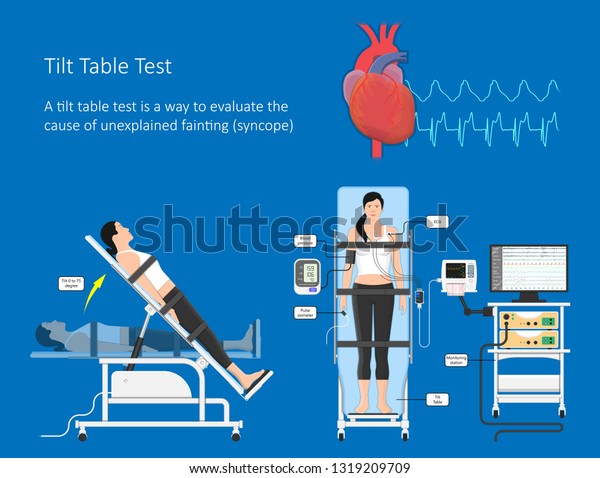
This includes prescription and over-the-counter medicines, vitamins, herbs, and other supplements. During this test, you lay flat on a table that allows you to be adjusted vertically and horizontally. It’s meant to simulate standing in a controlled environment. Access to these tables can take a long time, and sometimes they aren’t available in your area. You may have also heard that it could take up to seven years (!!) to get an official diagnosis. That’s the incredibly disappointing average for most people living with POTS to get a diagnosis.
If the test causes you to faint, the table will quickly be returned to a flat position to help you regain consciousness. The information collected can then be used to help your healthcare provider prescribe treatment. The tilt table test is done to find the cause of fainting . Syncope is a brief loss of consciousness and muscle tone when not enough blood gets to the brain.
In other words, 25% to 30% of people with vasovagal syncope have false-negative studies. On the day of the test, do not wear any jewelry or bring any valuables with you. You will be asked to wear a hospital gown during the test.
They may review your medications or recommend other tests. Because some people feel nauseated when they go from a sitting to standing position, a doctor may ask you not to eat two to eight hours before the test. This helps to minimize the chance you’ll be sick to your stomach. Straps at your waist and knees help you stay in position.

The technician will check you at several additional positions and then return you to a flat position. Your doctor uses this information to determine the cause of symptoms like light-headedness and fainting spells and develop the best treatment plan for you. There may be other risks depending on your specific medical condition. Be sure to discuss any concerns with your healthcare provider before the test. If your test was negative but you’re still having symptoms, talk to your doctor about other potential causes.
If you don’t have a change in your vital signs and still feel OK after the table has moved, you’ll progress to the second part of the test. However, people who’ve already had symptoms don’t need the second part of the test to show how their vital signs change when they move in position. You might not feel ill effects during the procedure, but you may experience symptoms like dizziness, feeling faint, or even fainting. A person with this syndrome can experience symptoms such as nausea, lightheadedness, and pale skin, followed by a loss of consciousness. If your blood pressure drops during this time, the nurse will lower the table and stop the test.
You may be confused for a bit after you become conscious again. An ECG may not detect occasional heart rhythm changes. Your health care provider may recommend monitoring your heartbeat at home. A portable ECG device, called a Holter monitor, can be worn for a day or more to record the heart's activity during daily activities.
Don't stop taking any prescription medications that you think might affect your blood pressure without your care provider's advice. This involves measuring blood pressure while sitting and standing. A drop of 20 millimeters of mercury in the top number within 2 to 5 minutes of standing is a sign of orthostatic hypotension. A drop of 10 mm Hg in the bottom number within 2 to 5 minutes of standing also indicates orthostatic hypotension. The provider may raise the table even higher or repeat this part of the test while watching for changes in your child's blood pressure and heart rhythm.

This is a rare, but potentially dangerous cause of syncope. Your tilt table test will most likely be done in an outpatient suite, although some healthcare providers have this capability in their offices. After the test, some people may feel dizzy or lightheaded, while others may recover right away. Verywell Health's content is for informational and educational purposes only. Our website is not intended to be a substitute for professional medical advice, diagnosis, or treatment.


